
How Do We Maintain One Nation Without Forcing One Model?
49 of 52 Questions for Democratic Renewal

Question 49 begins Part X—Meta Questions & Human Flourishing.
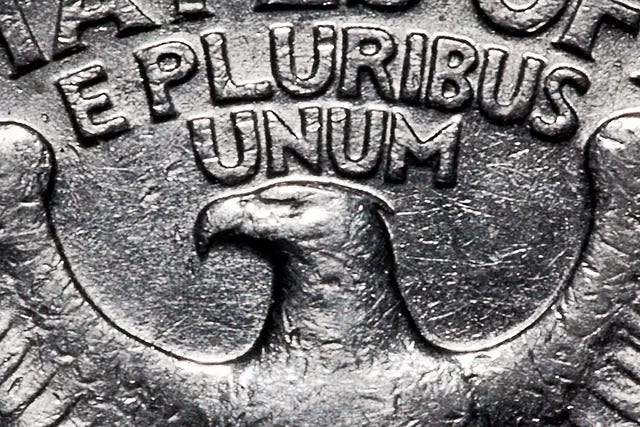
Question 49: How Do We Maintain One Nation Without Forcing One Model?
The United States was born from a paradox: unity in diversity. Thirteen very different colonies came together to declare independence, not because they were the same, but because they wanted to build something together. From the start, America was an experiment in how many kinds of people could live under one set of shared principles. But that idea has never been easy to live out. Every generation has faced the question in new forms: How do we hold together as one people, one nation—without trying to force everyone into one mold?
That question may feel especially urgent today. On the surface, we still pledge allegiance to “one nation, under God, indivisible.” But underneath that pledge is a society that feels deeply divided—by politics, geography, race, religion, and identity. Some want more local control. Others want national action. Some believe in traditional values. Others call for change and radical redesign. These tensions are not new, but they have been supercharged by social media, nationalized media coverage, and political systems that reward conflict over cooperation.
So how do we maintain “One Nation” without forcing “One Model”? How can a country be united in spirit but diverse in expression? Can we share a flag without all wearing the same uniform?
To answer that, we must first understand what unity in a democratic system really means.
Political Union
Unity does not mean uniformity. In a democracy, people are allowed to be different. That’s not a weakness—it’s a strength. Freedom means people get to choose their values, their lifestyles, their faiths, and their beliefs. What binds us together is not sameness, but a shared commitment to the rules of the game: respect, representation, equal protection under the law, and the peaceful transfer of power.
The Constitution doesn’t require every state to be the same. It doesn’t ask every town to look alike or every school to teach the same way. What it does ask is that we agree to be in this together, that we follow fair rules, and that we don’t use our differences as reasons to divide the country beyond repair.
When we forget this, we slip into dangerous territory. We start believing that if one group wins, another must lose. We start thinking that “those people” are ruining the country just by being different. That’s how democratic systems fall—not from too much disagreement, but from the belief that disagreement is a betrayal.
Space for Pluralism
In practice, holding together a diverse nation means building space for what some call “constitutional pluralism.” That means allowing different communities to live according to their values—so long as they respect the basic rights of others. It means states and cities can experiment, can lead in different ways, and can reflect the people who live there.
For example, some states may want stricter environmental laws. Others may prioritize economic freedom. Some towns may center their culture around a religious tradition. Others may focus on arts or civic innovation. As long as no one is denied equal rights—and as long as everyone stays within the bounds of constitutional law—this kind of difference should be welcomed, not feared.
This kind of federalism—local freedom within a national framework—was part of the original American design. But it only works when there’s mutual respect. When national politics turns every local choice into a battleground, people start feeling like they have to “win the whole country” just to live by their own values. That’s not freedom. That’s a constant civil war of identity.
To rebuild unity, we need to de-escalate the culture wars and remind ourselves that being one nation doesn’t mean making everyone live the same way. It means trusting that people in different places might choose different paths—and that’s okay, as long as those paths don’t trample on the dignity and rights of others.
A Common Human Framework
At the same time, unity requires more than just tolerance. It also requires a shared moral core. If we want to be one nation, we need to have some basic principles we all agree on—not just laws, but values. We need to believe in fairness. We need to believe in honesty. We need to believe that every person deserves respect, even when we disagree.
This is where schools, communities, families, and media have a big role to play. We don’t all need to read the same books or follow the same religion. But we do need spaces where people learn how to live together. That means learning how to argue without hating, how to lose without quitting, how to compromise without feeling like we’ve betrayed our beliefs.
Unity isn’t something we achieve once and forget. It’s something we have to practice, over and over. It’s like a marriage or a friendship—you stay together not because you never disagree, but because you choose to work through it. You choose to stay in the conversation.
Economic Opportunity
There’s another piece to this puzzle: economic opportunity. A country can only hold together when people believe the system works for them, or at least gives them a fair shot at a decent life. When entire regions feel left behind—when rural towns lose jobs, when cities face rising rents, when young people carry mountains of debt—a shared prospertity starts to crumble.
People begin to look for someone to blame. And that blame often falls along cultural or racial lines. If we want to stay one nation, we have to make sure that the foundations of security and opportunity are widely shared. That means fair taxation. That means affordable housing. That means public goods—like parks, schools, and libraries—that make life better no matter who you vote for.
Economic inclusion isn’t just good policy. It’s essential to civic peace. When people have dignity, they are more willing to respect the dignity of others. When people have a voice, they are less likely to feel that others’ voices are a threat.
A Land of Compromise
In the end, the project of “One Nation” is not about creating one answer. It’s about building a country where many answers can live together. That takes courage, patience, and trust. It takes a sense of civic humility—knowing that no group, no region, no generation holds all the truth.
It also takes imagination. We must be willing to think beyond the categories we’ve inherited. Left and right, red and blue, urban and rural—these are real, but they are not the whole story. Beneath them are deeper identities: neighbor, worker, parent, caregiver, steward, citizen. These are the roles that remind us what we share.
One Nation without One Model means creating a republic where people belong without being the same. It means designing systems that support freedom, while also inviting cooperation. It means defending diversity not as a threat to unity, but as a source of strength.
Can we do that? The answer depends on what we choose next—not just in elections, but in how we talk, how we build, and how we see each other.
We don’t have to agree on everything.
We just have to agree to stay in the work together.
Because self-government is not a machine.
It is a relationship.
And relationships are built—not by force, but by choice.
Question to readers: How can we maintain one nation while avoiding the forced application of one model?
Notes:
The Common Sense Papers are an offering by Common Sense 250.
Vision: We aspire to transform U.S. politics through innovation and principled leadership.
Mission: We champion independent political reforms that improve the common good through the voice of the people for each generation. We support deliberative democracy and the use of citizens' assemblies to inform legislative decisions.
Purpose: To act and operate as a social welfare organization in improving the effectiveness of government, providing tools for a healthy democracy, and promoting social welfare by debating needed reforms for a civil society.
Guiding Principle: Centered on Citizens in Pursuit of Happiness
I like your question: What does unity in a democratic system mean? I think one of the first things we have to confront is that saying a "democracy" is our highest goal is antithetical to unity. All this will mean is that the majority tyrannize the minority. Your explanation of "constitutional pluralism" shows that democracy is not the actual highest value. There should be some values that the simple majority just can't eradicate even though it would be democratic to do so. Of course, that is what the US Constitution attempts to do! This article calls it "respect[ing] the basic rights of others." Pure democracy tends to ignore those in times of stress particularly. We see this when "democracy" wants to criminalize speaking or writing words, as is happening in some parts of Europe now it appears. So shift the emphasis on democracy to this actual higher value and I think that value should be freedom.
Excellent discussion of a vital topic.
As I see it, the plague of our time is "tyranny". By tyranny I mean one person imposing their views on another person. This doesn't have to be at the government level. The worst tyranny is at a local level. Imagine one neighbor going to extremes to enforce their view of proper lawn care on their neighbor.
Freedom is the opposite of tyranny.
A stable society is where tyranny and freedom are in balance.
Some may believe that Simulated Intelligence (AI) is absolutely essential for the welfare of all, while at the same time others oppose the destructive effects of implementing it (building and powering data centers). Unity is allowing for some states and localities to embrace AI and it's promise for a better future, while other states may want to preserve nature and a different culture of life built on more traditional labor.
Often we talk as if government was the ultimate authority, while overlooking the power that money has. Wealthy mega corporations wield their money as power to implement their own choices. The failure of our government is the failure to protect us from these other forces. Whether that's your neighbor insisting you use toxic chemicals to destroy dandelions or Microsoft influencing government officials to get a power hungry data center built. Until government can actually represent the people and resist corruption, we will continue down the path of tyranny.